

Useful innovation: the life of an agricultural robot




In the Sectors , innovation is only valuable if it addresses real needs. Reducing physical strain, improving precision, optimizing working time, and supporting the ecological transition: growers’ expectations are clear.
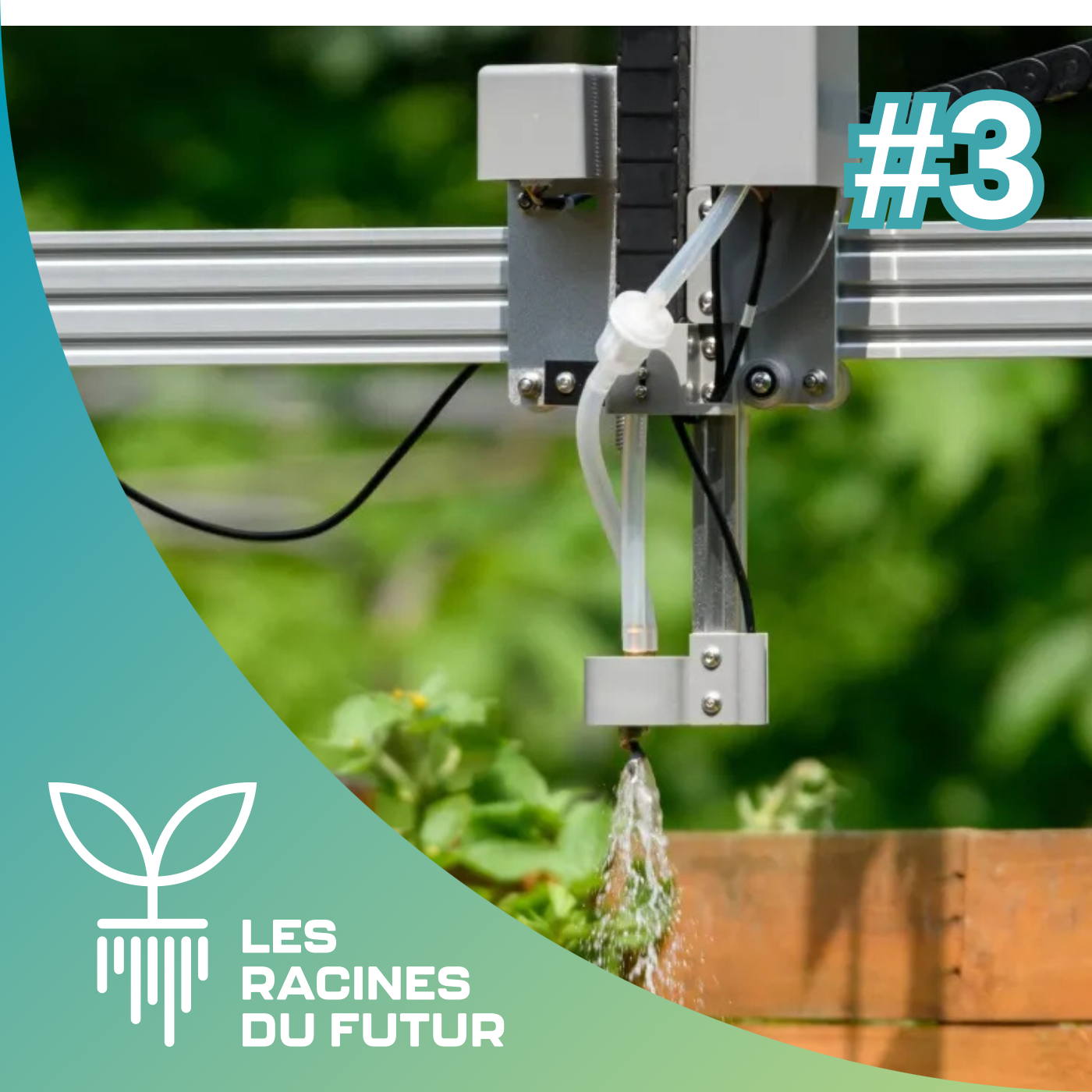
In this episode, we follow the journey of an agricultural robot. From concept to design, from testing to real-world implementation, this discussion explores what it truly means to innovate in the agricultural sector. What are the technical challenges? What human or economic barriers exist? And how can promising technology be transformed into a tool that farmers actually use?
Researchers, industry representatives, and farmers come together to discuss pragmatic innovation, experimentation, and occasional mistakes—but above all...
In the Sectors , innovation is only valuable if it addresses real needs. Reducing physical strain, improving precision, optimizing working time, and supporting the ecological transition: growers’ expectations are clear.
In this episode, we follow the journey of an agricultural robot. From concept to design, from testing to real-world implementation, this discussion explores what it truly means to innovate in the agricultural sector. What are the technical challenges? What human or economic barriers exist? And how can promising technology be transformed into a tool that farmers actually use?
Researchers, industry representatives, and farmers come together to discuss pragmatic innovation, experimentation, and occasional setbacks—but above all, solutions designed for the field and by those in the field.
An episode to help you better understand how robotics is being integrated into farms, and what it means, in practical terms, to innovate effectively in agriculture.
Hosted by

Guests


Information
What exactly is an agricultural robot used for? And how does one go from the initial idea to a tool that’s actually used in the fields?
In this episode, three guests share their perspectives to trace the life cycle of an agricultural innovation—from conception to implementation in the field—and help us understand what “meaningful innovation” in agriculture truly means.
Cédric Seguineau, director of Robagri and the Grand Défi de la Robotique Agricole, begins by offering a clear-eyed assessment of the current state of affairs. While the milking robot has led the way—80% of new livestock facilities now install them directly—specialized crop farming is still in the standardization phase. Weeding robots are making progress, driven by viticulture and vegetable farming. Harvesting robots, however, are not yet fully developed. He also points out that the real obstacle is not always economic: comparing the list price of a robot to that of a tractor overlooks labor costs, the lack of training, and above all the non-financial value—quality of life, reduced physical strain—that these machines can provide. A robot is not an end in itself: if you buy one based on a fantasy, it will stay in the garage.
Ludovic Patté, robotics manager at LVVD (the Terrena Group’s vineyard subsidiary), illustrates this concretely through his company’s experience: the company has been exploring vineyard robotics since 2012 but didn’t launch its first commercial product until 2025—because it took all that time to find a truly suitable solution. He emphasizes the crucial importance of ergonomics: the first versions of the machines didn’t convince anyone; today, some are as easy to use as “child’s play.” And for a winegrower who has embraced the smartphone, the leap is ultimately small. The robot, for its part, doesn’t care whether it’s Sunday or Monday to work—and that is precisely where its value lies: freeing farmers from long, tedious tasks so they can focus on those where humans remain irreplaceable.
Marine Louargant, an engineer at CTIFL, rounds out the picture from the applied research side. Her unit works to evaluate and compare robotic solutions under real-world conditions—test plots and production farms—to build concrete benchmarks: a given solution will be better suited to a specific crop, context, or farm size. Fieldwork, in constant collaboration with the Sectors, that always starts with farmers’ real needs to identify the scientific and industrial expertise capable of addressing them.
A technical, human, and practical episode—about what it truly means to advance agricultural robotics, step by step, in the right direction.
For further reading
The Roots of the Future®
Learn more about the podcast co-produced by SIVAL and CTIFL